 This year marks 15 years of Black Lace books, so we decided to get together as a posse and corner the Editor of the imprint, Adam Nevill, for an interview.
We should have taken nets. Adam is possibly one of the hardest-working people in publishing (I’ve had e-mails sent from his desk at 7.30 in the morning and 8.00 at night). It’s hard to believe that he manages to write his own books as well – BDSM erotica for Nexus under the name of Lindsay Gordon, and dark supernatural fiction under his own name – his novel Banquet for the Damned is out now in paperback, and a proper creepy Jamesian read it is.
But he gave us the interview. And oh what an interview…
Hello Adam – Welcome to Lust Bites!
How did you come to be Black Lace editor?
I’d been writing for
Nexus for ten years (
nine erotic novels as Lindsay Gordon – by the way, the one women like best is called
Angel, followed by
The Bond)
(Dammit – I just picked the covers I liked best – J) and the senior editor, responsible for erotica, Kerri Sharp, asked me to step up to the plate when my predecessor, Paul, moved on. I was asked to interview, take tests etc, and was then offered the job to look after Nexus. Kerri left six months later and her whole erotica empire was bequeathed to me, including
Black Lace, the
Wicked Words spin-off, and
Cheek. A mixed blessing because I ran the entire operation alone for three months (and nearly combusted) before Donna began as assistant.
You edit Nexus and Cheek as well as Black Lace. From your point of view, are these different experiences?
Some aspects are identical. On the operational side of publishing, it’s the same – each title in each imprint has the same critical path, same amount of work dedicated to it etc, from covers, producing marketing materials like catalogues, the sales materials for the reps, cover meetings, proof stages, reading commissioning and contracting.
Editorially, each imprint has a different set of guidelines and its own creative identity and direction, but the same rules apply in terms of the quality of writing submitted. I think it’s fair to say we’re more rigorous than many publishers of erotic material, in terms of the quality control applied to what we publish. A certain standard has to be achieved for each imprint. Content-wise there are differences too - Nexus is written by male and female authors, but its focus is on fetish erotica, BDSM etc and has a predominantly male readership. It tends to require a more specialist writer in terms of their interests in adult material and fantasy. Black Lace is written by women and is a explicit fictional exploration of female fantasy, the readership is mixed but women are its focus so a female readership is catered to in terms of story and content. Cheek is aimed at a younger US female romance reader with less explicit, and mostly hetero vanilla, erotica interests.
The experience is different because each series poses different challenges in terms of completing a schedule. Nexus receives far more submissions than the other two and we could fill the schedule many times beyond what we actually publish. Even when I was publishing 36 original Nexus titles a year, it wasn’t difficult to find fiction to fill such an enormous publishing enterprise. Black Lace has only ever had 12 original titles on its schedule per year since I have been in charge, and it’s far more difficult to commission. It is actually hard to find 12 titles per year to publish under Black Lace. Cheek is also a challenge to complete, even though we only do six titles per year. Cheek has relied almost exclusively on a stable of regular, trusted authors from the US – Alison Tyler, Michelle Pillow, Anne Tourney etc. Most of them I inherited with the series or encouraged to write more/again, but I did introduce Kate Pearce as a new author to the series, and Jamaica Layne. And Kate is a very popular author.
I think there are just so many opportunities for female authors right now in erotica and romance, which has led to a decrease in the quality of submissions from new authors – too many are writing too much.
Do you ever wake up in the morning thinking "Argh! Not more porn!"?
Never. Not more bad writing, sure. Not more delusion and missives from the criminally insane, sure (you’d be amazed at what erotica publishing attracts in the post, or maybe you wouldn’t be). But human sexuality and fantasy is never dull. It’s a privilege to have so many fantasies and fetishes and ideas shared with me.
What was the first naughty book you ever read?
Delta of Venus by Anais Nin. I was eleven and knew nothing about sex at that age. In fact, I remember arguing with friends loudly in the street, that babies were born through the tummy button, and were willed into existence by a mother wanting a child. All of my friends were laughing at me. I was clueless and getting angrier with them all. It left me baffled, but my curiosity led me to the only book in our house that had a vaguely saucy cover. The house was full of books and on the shelf that contained Henry Miller, James Joyce etc, I found a hardback book with a cover featuring the photograph of a woman adjusting her stocking. I began reading it whenever my parents left the house. And I must have read it four times before actually had a sex education lesson at school, so I received the birds and bees from a French woman, who wrote bespoke erotic fantasies for male patrons in Paris. Not a bad way to learn about sex, but it set up enormous expectations. Sex had a lot to live up to. It also had the most incredible impact on my imagination – I thought of sex in Anais Nin terms from then on, and started writing erotica later because of her work.
Being an erotica editor sounds like a dream job. But tell us about the hard work involved - What does a day at HQ look like?
I’ve never had such an interesting job, nor such a demanding one. There are only ever two of us, working on between 50 – 80 titles per year, depending on what’s in the schedule. And publishing requires precision and every aspect of creating a book, is time-consuming. We’re also probably liaising with over 80 authors because of the huge backlist, let alone the current year’s work we’re publishing plus the following year’s schedule we’re trying to commission at the same time. So we’re reading for the following year’s schedule, working on proofs for books five months away from publication, writing marketing and sales materials for books ten months prior to publication, choosing covers for books somewhere else along their critical path, organising contracts for another part of the schedule, trying to keep up with author correspondence, sending out review copies every month … Stop, my chest is going tight and it’s the weekend as I’m writing this. So it is no exaggeration to state that the workload is colossal. Just colossal. It’s a vocation for me, not a career. I’m not a career-publisher/editor – I’m just in it for the books and writers. And from that, the rewards can be tremendous. To find a new author, to know a book you are publishing is bad-ass, to complete a good collection of short stories, to see all the new titles arrive in their shiny new covers each month, to read the good reviews, to work with interesting creative people … It all balances out.
 How do you think that Black Lace has changed over the last 15 years, and where do you see it going in the next 15?
Good question. I look back on its golden period from 1993 – 2000, and am in awe at how huge BL really was. It was a cultural phenomena. Publishing genius. And run by some very talented people, notably the chief, Kerri Sharp. The variety, the extent, the poignancy and power of female sexual fantasy contained therein shocked and surprised a great many people. It had an impact similar to Nancy Friday’s Secret Garden. It was a liberation for female sexual fantasy. It had a certain tone and manner back then too – you could really feel the influence of classic twentieth century erotic literature like ‘O’, the subversive historical romps, of rebellious elements in taboo twentieth century fiction that pressed against the bounds and limits of what was deemed acceptable for women to read and write about. It was so far removed from the tepid bonk-buster – it produced some riotous and libidinous erotica. It was groundbreaking.
The world changed very quickly, and continues to change. The book trade changed, the internet came along, television became more racy, a zillion satellite channels appeared, hardcore was plentiful, electronic and digital media just exploded – and the whole publishing environment for erotic fiction changed. Our monopoly on what was unacceptable and illegal in other media was over. But BL kept pace with the times, had a make-over, bought a new wardrobe and had extensive cosmetic surgery. It entered the Sex and the City age and started to feel younger, and more contemporary. Historicals were published rarely, and there was pressure in-house to turn it into chick-lit. Which is how Cheek came into being. But after such an explosive and powerful start in life, Black Lace is a lovely sleek proud feline that would struggle to change its spots. Nor should it. And the trade will always throw it on to the top shelf in the UK, so why disappoint expectations? So despite the various pressures, there may have been a lessening of BDSM interests, or themes that had become tired, but it still remained edgy. I always thought of 2000 onwards as the riot girl age – Tabitha Flyte, Mathilde Madden, Anna Clare, Alaine Hood, Emma Holly etc There were fewer highwaymen, brooding masterly types in chateaus, and corsets, but lots of new voices.
Since I’ve been there (2005) my biggest and primary task was to find enough authors writing books good enough and suitable for Black Lace. A lot of authors were alienated by the change in direction a few years before. We had major drop-off in submissions, and many authors were now writing for other genres too, having cut their teeth with BL. And I also wanted to keep the series not just up-to-date, but to also anticipate new trends in female fiction. I’ve really had a shot at the cross-genre paranormal erotica, as it’s own mini-series within Black Lace, and pushed for more elements of what the US call erotic romance too, because the US is our biggest audience and women out there are enjoying a similar thrill with erotica that women experienced back in the UK in the early nineties. And erotic romance has mainly been intense vanilla, light bondage, and straight erotica with a HEA ending. The huge romance community and arbitration bodies in the US recently accepted female-authored erotica into the canon of romance and, therefore, what is sold in the romance sections of bookshops (and romance accounts for 40% of all paperback sales in North America). So it’s a massive deal for us to be hauled out of the zoology, psychology, self-help, sex and relationship sections, at the back of US bookstores, and to be shelved within the all-important romance section. And it has been really important for a while to keep BL looking a certain way, in order to break into and then maintain our presence in that side of the US business. We’ve also innovated with the covers in the last four years, to create a style palatable to both the US and UK. And if you look at the new anniversary editions, you’ll see where we’re going for the foreseeable in terms of imagery and art direction. We’re making a statement – we’re a classic brand, and we built the first wheel on this wagon that many have copied, and many have come and gone, but BL remains as the original erotic series fiction written by women.
The erotic romance direction has called in some flak over the last two years, and I completely understand the ire I may have caused, but becoming more attractive to the US market has really helped to continue our fortunes, and our foreign rights sales are better in contemporary straight erotica territory. Of course, the US market is also changing and the content is getting harder out there, and closer to what we were doing back in the nineties, and I’m also acutely aware that some of the edgier BL titles are also selling better everywhere now. So, I welcome older school elements, and darker explorations of female fantasy going forward.
In the near future, we’ll do exceptional historical and paranormal erotica – like Janine Ashbless’s brilliant new collection, Dark Enchantment (:-D And I didn’t even prompt him – J) – but will mainly concentrate on contemporary settings, with stories featuring a wide range of female sexual fantasy. And they can be just as explicit and daring and action-packed as they were in 1993. I want to do more old-school titles, in the same vein of Fredrica Alleyn’s Cassandra’s Conflict and Susie Raymond’s Forbidden Fruit. It can be confusing for authors to get so much information about alterations in direction, but markets change, and so do tastes, and editors get hit with that first. But the constants remain, whether your style tends toward the literary (see the marvellous Kristina Lloyd and Leonie Martell and Olivia Knight), or a far more commercial and mainstream style – then the writing has to be strong and the erotic content surprising and arousing.
So aim to write good, edgy, action-packed contemporary stories.
Do you think the boom in the American erotic romance market will result in increased publicity and sales for BL/Cheek in the US?
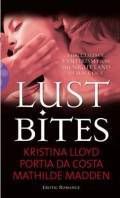
I think this has already been happening since 2006 – I’ve been out to RWA a few times to represent our books; we have a great new US distributor; and we enjoy a lot of new exposure in the US romance community now. We get so many great reviews on romance websites, and I’ve tried to encourage a US approach in the way we all market and publicise ourselves as authors. In fact, Lust Bites came into life after we did a live BL & Cheek online day with Romance B(u)y the Book.
As a result of these efforts we’ve grown Black Lace in the US. But it hasn’t happened by accident and just as a result of trends – not wanting to blow our trumpet here, but a lot of us have worked very hard to improve our profile in the US and increase sell-in.

(With both halves of Sophie Mouette)
Have you seen any changes in the more popular scenarios and fetishes in recent years? What would you say is popular now?
That’s a huge question. Worthy of PhD study. Even a book. Because the internet has shown just how diverse human sexuality is, and how increasingly partialist it is becoming. Before, this was only reflected in magazines like Skin Two, Forum and Desire, and underground presses that had large readerships, and in Nancy Friday’s groundbreaking books. But the neural networks, largely around visual media, that have erupted and evolved online have changed the sexual landscape beyond measure and even comprehension at times. How can the book keep pace? How can erotic fiction be kept both entertaining and within guidelines and be a working model of modern sexuality? A challenge – that we have met with some groundbreaking ideas. Nexus Enthusiast and Confessions have embraced these bespoke erotica trends by being more specialist. BL has branched into new cross-genre areas too. In BL I’d say female submission within the sexual act is still the mainline, regardless of the feisty preliminaries or characters, but the ménage and the greedy girl is even more popular than ever. Empowerment through surrender, really. Becoming the centre of unrestrained male desire – becoming the spark that starts the fire. Gay porn has had an impact too on women’s erotica (homo-erotica seems more popular than ever in fan-fiction). Fem dom is massive with male readers but seems to have passed female readers by. I’d say The Private Undoing of a Public Servant by Leonie Martell is one of the best erotic novels published in recent times – it’s a very vivid, intelligent and arousing story, as much as an investigation, into male submission and female dominance. But the reaction to it has underwhelmed me. I think it will endure and become a classic, but in its own time, it has had a normal reception. So group sex, and even extreme submission to the opposite sex, seem to be high on the agendas of male and female fantasy.
Are there discrepancies between what the readers are seeking and the types of material you are being sent by writers?
Our hands are often tied by what we receive – it’s not easy to write fiction well, and erotic fiction is just about the hardest field to get right. So as an editor, you will always publish the best writers, and the best submissions you receive in any period of time, and writers are at their best writing about what rings their bell, so it might not always tick every box for the widest number of readers. But this is where the anthology is king, and our short story collections are very popular. It’s the best medium for erotica – you can dip in and out and find that scene that electrifies you. With a novel, it’s good if it can cover a broad pattern of sexual fantasy within its story. Use your imagination and grow – writers and readers alike can be very self-important in terms of their own tastes. We have one writer that the critics constantly berate, or refuse to review, but he sells so well in Nexus because he does female shame so well – "I really shouldn’t be doing this, but my damn body is betraying me" – so those simple, basic fundamentals still constantly underpin erotic fiction. Don’t underrate them. Use them in different circumstances and situations, and with characters with whom their very status, and what is at stake for them if caught, ratchets up the tension and anticipation. Incongruity is vital for humour and sex in fiction.
We constantly ask readers what they want with Nexus, and with BL we’ve conducted surveys through our sexual fantasy books, upon which the guidelines are composed. They flood in from the websites every day. And fantasies tend to be very specific. So much so that it would be impossible to publish individual books about, say, medical procedures, pubic hair, special breeding farms, enforced cross-dressing by matronly aunts, corporal punishment in military academies, etc. And these are a small example of what we are asked for every week. All of the information we draw from our readers, from sexual media, and from those books that seem to get word-of-mouth and fly off the shelves, we process into a direction we hope is as representative as humanly possible. Nexus Enthusiast was a bold experiment to produce definitive books about one sole adult interest – so we did rubber, wife-swapping, CP, cross-dressing novels. We had readers writing in to say they were like their own autobiographies, or they would write in to say we’d missed things out: e.g. "the one about legs" featured a scene where a woman had sex bare-legged, which was unacceptable, and the one about bottoms didn’t describe the underside of a buttock enough, etc. So within each fetish, there are also subcultures, that are only interested in their one aspect of that kink. It could drive you mad. It was this experience that led me to encourage an author to invent a Victorian encyclopaedia of sexual perversion – Curious Pleasures: A Gentleman’s Collection of Beastliness. And it is wonderful. With BL, readers will say the titles are not hard enough, or that they go too far; others will say they don’t like two guys together, or two women together, another has written in to stress the importance of how sexy well-endowed stags are (It wasn’t me!- J) … See where I am going with this? Readers tend to be very specific about what they want at the expense of every one else. So it always tends to come down to the best writing about sex.
I’d also stress that a story and character that can become a vehicle for varied and plentiful sexual behaviour must always be a writer’s starting point. Then bring in a good broad set of experiences and fantasy. The rest is in the hands of the readers … But here is a clue: more is better than less, when it comes to sex. Writers often make the mistake of developing elaborate storylines, and huge casts of characters, into which the erotic elements feel contrived and shoe-horned in.
My local Borders has purged all the Black Lace books out of Romance and back into Erotica – apparently on head office orders. Is Black Lace ‘Erotica’ or ‘Erotic Romance’?
We moved it to romance in the UK temporarily, hoping to replicate the US model. It was a disaster. Romance readers are different here and erotica fans could not find our books in erotica, so it backfired. Black Lace is back in the erotica section to stay. Black Lace is erotica and erotic romance. Erotic Romance is as much a marketing and sales category to save Black Lace from oblivion in the wrong section of US bookshops, as it is a creative direction for some stories that follow conventional romance structure. One of the conventions in erotic romance is the HEA (happy ever after ending) and although a good Black Lace novel wouldn’t be rejected without one, it is a convenient and often appropriate way to end an erotic novel. It can really give the story a focus. When the girl and her object of desire (or objects) – irrespective of how many other lovers are encountered along the way – get together at last, it generally goes down well and achieves closure on an upbeat note. Nearly all popular female fiction is aspirational in a romantic sense, and we’d be foolish to deny that. I don’t know why this is seen as being a sell-out for erotica – it should not affect the action up until that point, nor the degree of explicitness. We can’t have ‘O’ dying under a table on a leash forever. Downbeat endings are not encouraged, unless you’re really clever. Too often, with proposals from new writers, the stories and characters are working out all kinds of self-loathing, self-harming fantasies, which is inappropriate for series fiction... and ER does not mean you can’t have hard sex on every other page.
Black Lace as an imprint empowered women to write and read about their own fantasies. It is still strictly female writers only. But here you are, a man in charge, telling us what we ought to be writing about. Any thoughts on that?
Here we go, he thinks with a smile. Yes, it’s girls only in terms of authorship in novels. I’m not sure I am telling you all what to write about either – I still use the guidelines on content that were handed to me by Kerri and I have accepted a wide range of stories and styles. I’d even say I’ve broadened the scope of BL. Though, as I’ve explained above, I have sometimes altered direction to meet market trends because this is a business. I’m not completely ignorant of female sexual fantasy either – in fact, I’ve probably read more examples of it in the last six years than most women do in a lifetime. I read it all day, every day. And I know the difference between ‘niche’ or ‘damaged’ and what’s arousing/interesting to a general reader. I also have to produce a balanced schedule (so can’t do seven titles in a row with exactly the same theme etc), and have to meet the expectations of the US, the UK, the international market, two sales forces, two sets of book trades. And every one has an opinion. If you read transcripts of some of our cover meetings in the past, you’d wonder why I never weighted myself down with bricks and slipped beneath the grey murk of the Thames.
On content, I sense a frustration on behalf of some writers. But there have been times in the past when ‘upstairs’ will step in and say, "two guys together and we could lose our place in romance in the mid-west", or "get rid of that bondage stuff, make it like …", etc so there have been episodes when we have discouraged certain themes that were at odds with where we

wanted to get the books sold. But that’s mostly over now.
(YAY!!!- J) I try and be inclusive without stifling creativity, and hope to stay true to BL’s legacy.
But guidelines are necessary – erotic fiction about rape under the influence of alcohol and drugs is not permissible. But I get so much of this. If a series of books that is dedicated to being about pleasure goes this route to satisfy a few writer’s personal visions, or need to shock, it’s curtains for us all. There is a difference between what is acceptable for literary writers to explore with taboos, and what erotica series fiction authors can explore with taboos. I’m not a censor, but occasionally I do have to step in. Make the books hard, daring, and action-packed, but make sure they are about pleasure too. The most common discrepancy is actually not an erotic scene or tone that contravenes guidelines, but a lack of sex in the finished delivered book. Or sometimes it’s the very same sexual fantasy over and over again in every scene (usually the mark of a straight romance writer masquerading on the dark side). Or too much wearisome chatter that goes on page after page (the blight of modern women’s popular fiction). If a writer does not have a natural affinity for pervery, kink and the erotic, the books are never as good. And often the most creative and sensitive and talented erotica authors also have the most idiosyncratic tastes. So my job isn’t easy. But some of the books I’ve published really are radical for this genre –
Private Undoing and
Split come to mind, let alone
Enchanted.
What do you think Black Lace’s reputation/position is among readers, in the competitive international market?
We’re big in continental Europe and Scandinavia, and also throughout the Anglo-sphere. We are the market leaders. In the US, there are bigger fish that have come out of enormous romance enterprises, but we still hold our own as a British export.
In an ideal world, and if you had total control of the imprint, what would you change?
Cheeky. (Me - ask cheeky interview questions? Surely not! – J) I’d probably insist on a novel being finished before I commissioned it. I hate getting burned on the delivery of a manuscript after commissioning it from a proposal and three chapters. I’m a hands-on editor when I have time to be, and I’m a stickler with quality. Much can go wrong when an author gets a contract after writing only three chapters.
I like erotica covers to look serious and noirish and European, but am as close to that vision as I can be now with the new look.
And I’d command a huge marketing and publicity budget and your books would be advertised all over the tube.
What's the worst / funniest / most absurd proposal you've ever received? (You’re not going to answer that one, are you...)
The list is long as regards content and the madness of the writer (but I do keep a file). I tend to find the attitudes of aspiring writers more absurd – particularly those who can’t write, but tell me when I will publish their book, and what a great film it will make. They’ve never read BL and assume their work is just better than anything we have ever published.
Which part of your job do you like most and which part dislike most?
I like the writers, putting together a new series look, discovering talent, seeing a book do well, and reading something that suddenly gives me a shiver.
I dislike not having enough time. I am a perfectionist.
What's on your desk?
A blizzard of paper and piles of manuscripts around a dusty PC that gets called such names. I’ve never even had time to take down the postcards or notes left by my predecessors, or to replace the stationary. I just added one newspaper article with the headline, Down With Human Life. We get in, switch on, and then it’s heads down until we’re half blind. That’s erotica editorial.
What’s under your desk?
The Black Lace Sexual Fantasies questionnaires from the nineties and all the old samples from fetish photographers that I can’t bear to throw away. I love erotic photography. Plus all of the covers going back to the beginning – two copies of each. Beside that, dust, dried tears, and the odd paperclip.
When you do that scan-opening-of-submitted-writing thing that all busy editors do, what do you look for?
A good concise, legible covering letter, a simple outline and three chapters. It’s not rocket science, but accounts for about one in ten submissions. It’s amazing how impressive a succinct, intelligent letter can be, informing us that a writer has read our fiction and guidelines, and has written erotica before, and is a fan of erotica, and has written X to the right word limit. Self-important braying in a weird type-face, preceding 400K words of something about torture, or how an ex husband was a bastard, has the opposite effect.
What's your worst bug-bear in bad writing - the thing that really gets your goat?
Overwriting in sex scenes – a belief that if you fill a passage full of throbbings etc it’s good. It shows a total lack of respect for readers of erotica. I get it from agents too – here, your readers will love this "filth", one said to me recently. I doubt the agent had even read a word of their client’s work. I saw red.
Add a total ignorance of the craft and a failure to rewrite – ie first drafts that are dashed off and posted by big egos. It’s just a waste of everybody’s time.
And finally, a total ignorance of our imprints.
What's the thing you love most in good writing - something that thrills you when you see it?
A seamless integration of action with convincing dialogue and exposition – considered and inspired writing. To get that visceral tug inside when I know I am reading a real writer with a passion for the erotic.
What (non-erotica) do you enjoy reading in your personal time? 
I read widely – lots of dark literary fiction, 20th century American fiction (Bellow, Updike, Doctorow, McCarthy etc), quality horror, classic supernatural fiction, books about writing and writers. Memoirs by soldiers and men tested by extremes of late.
Do you get horny reading our stuff? Ever? Oh come on, surely occasionally...?
There are times when I do feel a pleasing tremor run up and down my spine, after a button has been pushed. I’m only human.
Thank you Adam for giving us so much of your time - and for being so candid and informative. It's much appreciated!
Thank you for having me, and I’m sorry it’s taken me about a year to finish this interview.


 ::
::


 ::
:: 

 ::
:: 
 ::
::


 ::
::
 ::
::



 Getting there: making a butterfly net
 Working hours
 Discipline
 Financial pressure
 Be schizophrenic
 The other writing
 Forget the money


