

 ::
::


 ::
:: 

 ::
:: 
 ::
::


 ::
::


 ::
::




Want to write a best-seller with plenty of sex? Well perhaps you might be lucky if you follow in the footsteps of Samuel Derrick.
Who was he, I hear you ask? Well, Mr Derrick was Irish and a bit of a con-man if history is to be believed. He used to pretend to be a member of the Irish aristocracy but in reality he was a draper's apprentice, a bad actor, and a failed poet. He was determined to better himself, so travelled to London in an attempt to join such luminaries as Smollet, Boswell and Johnson. These lofty gentlemen, however, didn't give him the time of day.
At some point, (probably, the scholars reckon, in Debtor's Prison), he must have met up with Jack Harris, (AKA as John Harrison), a waiter, and a notorious pimp - self-proclaimed "Pimp General of All England." It was Mr Harris who had a handwritten list of prostitutes, but it was Mr Derrick who - under Mr Harris's name - published the list as Harris' List of Covent Garden Ladies and made a fortune. The book was a barn-storming best-seller and sold 250,000 in its 38 years of being in print. In a city with well over 3,000 prostitutes (for a population of 675,000) Harris' List of Covent Garden Ladies was a must have accessory for any Georgian man of leisure and pleasure Harris' list was more than just a list. It was a tour of the houses of negotiable affection, "the votaries of Venus" and the prostitutes more personal address.
It wasn't just a list though, nor was it limited to Convent Garden! - it also included anecdotes on the ladies' careers and conquests. It detailed not only their addresses, physical characteristics but also their “specialties”.
Such as: 'Miss Smith, of Duke's Court in Bow Street, "a well made lass, something under the middle size, with dark brown hair and a good complexion" ' Miss Kilpin, who offers her favours inside the privacy of hackney carriages, but who is in reality 'a married city lady, who takes this method of getting home deficiencies supplied abroad'
Mrs Grafton of Wapping was fond of sailors. Her 'best customers are sea officers, who she particularly likes, as they do not stay long at home, and always return fraught with love and presents'.
Miss C: who perfumed herself (particularly below the waist) and entertained a prince who "was so much of an Englishman to despise all fictitious aids in that quarter and, turning up his nose at the ... musk, which was quite offensive to him, he rang the bell and sent the servant for a red herring".
A gentleman in possession of the book would know where to go for the fat and the thin, the top-market whores, the cheapest of the cheap. He'd be informed on the state of their teeth and tits - and their former conquests - nice to know who'd been there before you! Mr Derrick - on the merits and profits of the book - did manage to become respectable, in the end. He became Master of Ceremonies at Bath on a huge salary of £800 a year - around £100,000 a year in today's money - but despite this rise in fortune, he still died penniless. After his death, the book continued in print in the hands of a society-aspiring prostitute, Charlotte Hayes, although it was generally thought that Ms Hayes did not write with such wit as Mr Derrick. New versions continued to be printed annually until 1797 after which society was becoming a little more prudish.
Read more in: "The Covent Garden Ladies: Pimp General Jack and The Extraordinary Story of Harris’s List" by Hallie Rubenhold – Tempus Publishing, ISBN 0-7524-2850-0
And if you get hold of a copy of The List itself - let me borrow it, will ya?
Friday, October 10, 2008
(Fe)male Order Shopping-Harris' List of Covent Garden Ladies

Friday, July 18, 2008
Tale of a Tail...

 Firstly, I have to blame James Spader as the brilliant, sexy archaeologist in the Stargate movie, for re-awakening my interest in Egypt and ancient civilisations (I know, technically I should blame the filmmakers and not James himself, but I’d rather blame him for just about everything, if only so he’ll work that much harder to make it up to me if we ever meet...)
 The average ancient Egyptian was naked to a large extent, the heat and poverty limiting the clothing owned or required. They shaved their pubic hair, used sex aids made of polished wood and ivory, considered lettuce to be an aphrodisiac, and when they died, the men had false phalluses attached to their mummies, and women had false nipples, in order to continue to enjoy sex in the afterlife. Go prepared, I say...
  Egyptian erotic papyri, with poetry and detailed drawings and descriptions of assorted positions, were valued throughout the known world (the Roman Emperor Tiberius was said to give his extensive collection a regular, er, "going over"); sadly, few examples remain, though you might still see some examples of erotic graffiti on tomb walls – if the guides let you in those areas...
Sex permeated their lives, from commoner to ruler, fertility being important in such a harsh environment. Furthermore, unlike modern society with its schizophrenic seesawing between stigmatising sex and wallowing in it, the ancient Egyptians accepted sex in all its forms, with an admirable openness. To them, the universe began with masturbation, when according to one ancient Pyramid text, “Atum-Ra took his phallus in his grasp that he might create orgasm by means of it, and so were born the twin gods Shu and Tefnut." From these came more gods, with many more tales of orgies, incest, drunken sex, homosexuality...

One goddess in particular intrigued me the most: Bastet, goddess protector of cats, a local deity who gained prominence for centuries, probably helped by the barges of drunken orgiasts who would travel each year to her ‘hometown’ of Bubastis. She represented the cats who had become the ancient Egyptians’ valued ally for their efforts at pest control in the granaries, a respect that grew into an unparalleled veneration (killing a cat was tantamount to murder, and cats would be mummified along with humans). Like many of the Egyptian gods and goddesses, Bastet was pictured either as a full cat, or as a human figure with a feline head.
 And she epitomised the fascination that man has always had for cats, for their qualities: beauty, power, grace, savagery, sensuality, maternalism, ferocity – qualities equally applied to women. We all have some of the Cat in us. So it was inevitable that images combining cat and woman would appear, touching folklore and popular culture of werecats and witches' familiars through the centuries, up to the catgirls of Japanese manga and anime, and the comic book antihero Catwoman (just don’t get me started on the movie...)
 I couldn’t get the image of a woman with a tail out of my mind. How would she think and feel? What would she do, what would turn her on? What would sex be like with her? The image of the feline woman started as a story, and then expanded into an entire race of people with cat-like qualities such as tails and claws, epitomised by a member, Kami, who would venture out into the human world to experience sexuality among them. And as it set in my head, more ideas began to attach themselves, especially as I began looking into other cultures such as the Mayans and South Africans and their legends, and read about the behaviour of domestic and wild felines.
 A trip to Cappadocia, an isolated part of Turkey where underground warrens of tunnels carved out by natives from the volcanic rock millennia ago, gave me the Pride’s home, a distant but reachable part of the world to which they might have emigrated centuries before to escape persecution. And knowledge of the clothing, tools and given names of Ancient Egyptians fed me a natural inspiration for a people considered the children of one of their goddesses. And seeing the Mummy movie (with the gorgeous Oded Fehr as the dashing Bedouin Ardeth Bey) gave me the idea of a cult of humans who would know of the Pride, but would worship them as the Children of Bastet, and would protect their secrecy from the outside world.
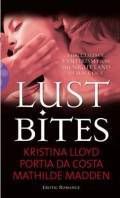
Before I knew it, the story had grown like a bonsai on steroids (I’d liked to say the story wrote itself, but that would be a total lie. I ended up having to put down just about word of it myself, while it sat around eating my Haagen-Daaz and backseat driving). But it was written, it was published, and the rest, as they say...
I may never go back to writing more adventures of Kami and her people, but the potency of their images and appeal will remain with me...
So come on readers, what do you think? Would you like a tail? Do you let the Cat out at night?
